TÜRKÇE
Gavurkale Relief
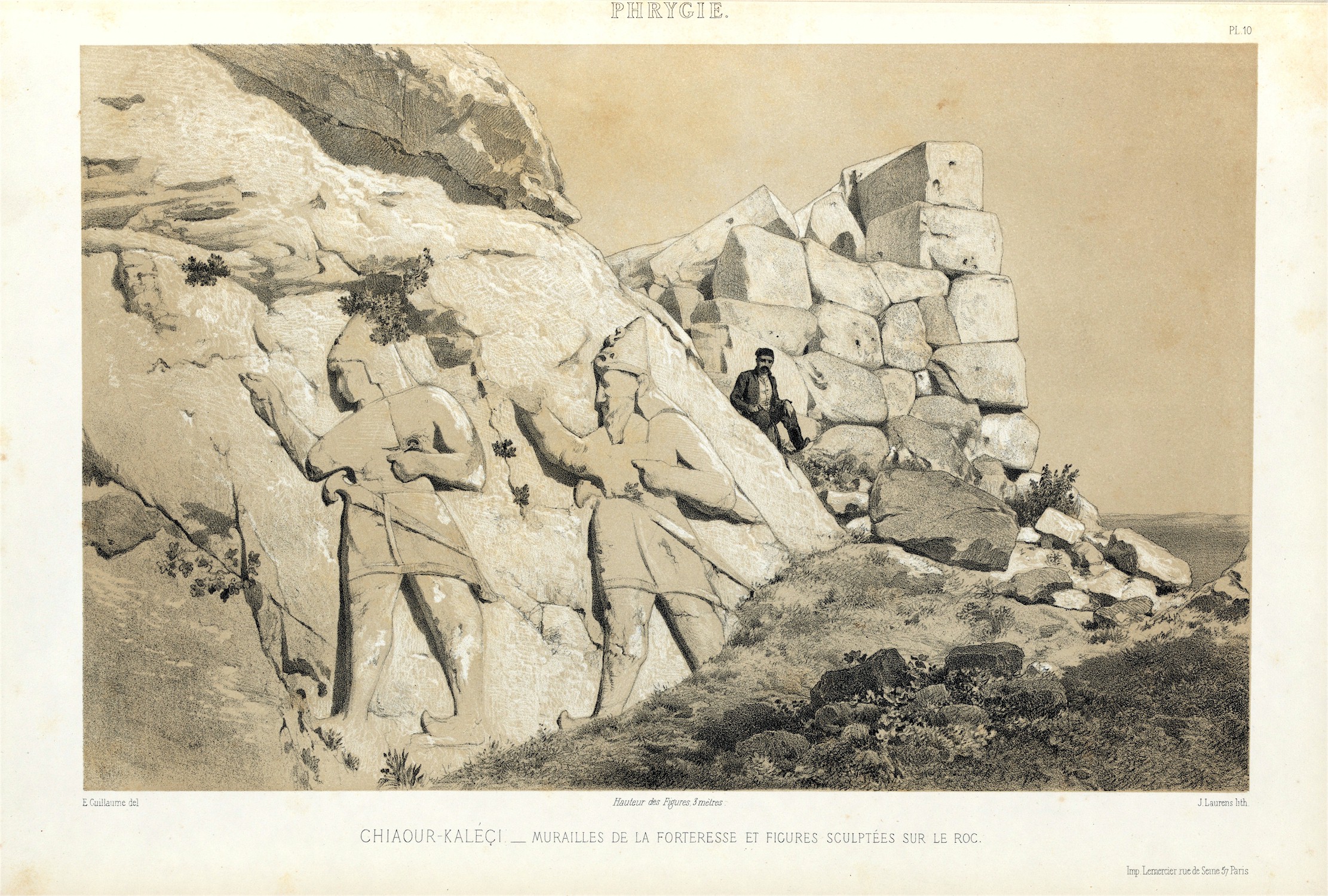
Gavurkale (or Gavurkalesi, literally Infidel's Castle) is a rocky hill that rises 60 meters above the floor of the narrow valley of Babayakup stream, located north of the Dereköy village in Haymana, Ankara. Gavurkale was visited by early travelers like Georges Perrot and Edmond Guillaume (1861), but the first comprehensive study at the site was made in 1930 by H. H. von der Osten of the University of Chicago. Between 1993 and 1998, extensive surveys and excavations of the site and the surrounding valleys were carried out by Stephen Lumsden on behalf of Bilkent University.
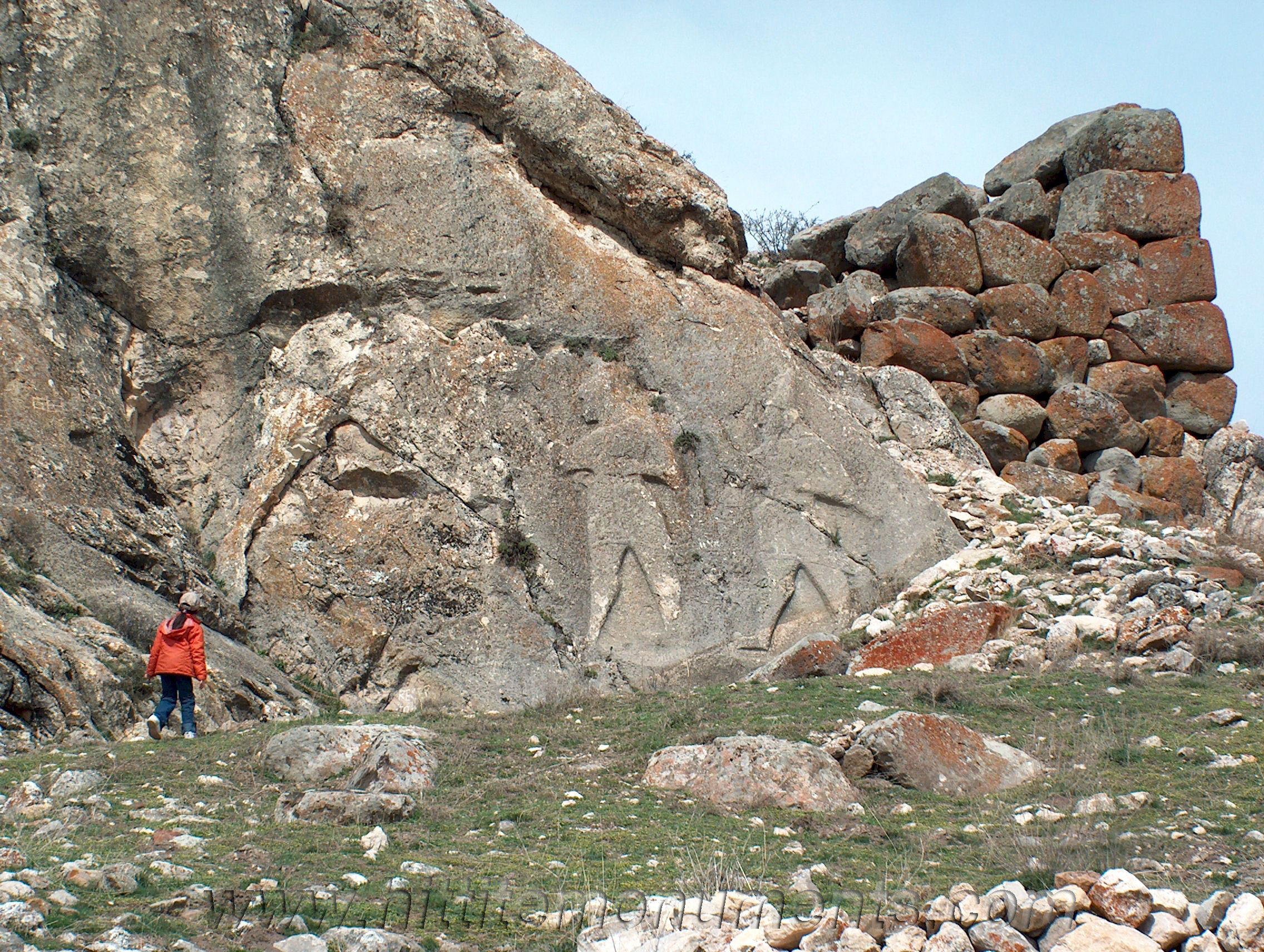
Most of the ruins at Gavurkale date to the Hittite and Phrygian periods, but the site is mainly known for the Hittite period rock reliefs. The reliefs carved on the flattened rock face towards the top of the hill depict three deities. Two large male figures are clearly visible, shown as striding toward the left. Although there are no inscriptions, the existence of multiple horns on their conical heads identifies them as gods. Both wear short tunics and pointy shoes and carry swords in their belts. The first figure has no beard, but the second one does. They face a less visible and smaller seated figure on the left, possibly a goddess. She has a similar conical hat. The goddess figure is located slightly higher on the rock and thus damaged by erosion. It has been suggested that another artificially flattened bare rock surface further to the left may have been intended for additional reliefs. On the rock above the reliefs rises the remains of a cyclopean wall structure of the Hittite period. Within this walled complex is also a chamber with stone walls, the function of which has not been entirely determined. The site possibly had both military and ritual significance. It may have been one of the hilltop rock sanctuaries, referred to in Hittite texts as a hekur, "Stone House," which served as funerary facilities for the Hittite royalty.
Click on the pictures for larger images.